The sameness problem and why design now decides everything
Scroll any booking platform for a Maldives resort and the pattern appears quickly. Every Maldives hotel promises a private water pool, endless ocean views and a Maldives luxury villa hovering above a turquoise lagoon, yet the images blur into one long sunset. When every island claims to be the best Maldives escape, contemporary resort design becomes the sharpest tool for separating genuine character from generic gloss.
For business-leisure travellers extending a work trip, the question is no longer simply which luxury retreats have the largest villas or the shiniest architecture. The real question is which Maldives resort uses layout, materials and interior choices to connect you to Maldivian nature rather than wall you off from it with marble and glass. Ministry of Tourism arrival statistics for 2022–2023 show that well over two-thirds of arrivals now choose all-inclusive stays (see Maldives Tourism Yearbook 2023, Chapter 4, “Tourism Accommodation”), which means the villa becomes the experience, not just the room, and architecture quietly dictates how you move, feel and even work across the day.
The sameness problem starts with the brochure shot of an infinity water pool at sunset, repeated across hundreds of resorts and hotels. Many properties still rely on imported stone, heavy air conditioning and sealed interiors that ignore natural airflow, which feels increasingly dated in the context of current hospitality thinking. By contrast, the most interesting new openings use design-driven strategies, from shaded open-air corridors to low-slung villas that follow the curve of the island, to frame the view travellers actually care about, which is the reef just beyond the deck and the house reef proximity from each water villa.
Resort developers, interior designers and local artisans now sit at the centre of this shift in Maldivian hospitality. According to the Maldives Tourism Yearbook 2023 (Chapter 7, “Environment and Sustainability”) and UN Environment Programme guidance on sustainable tourism in small island developing states, the leading styles in island resort architecture focus on resource-efficient construction, private island concepts and cultural authenticity. That combination of priorities is not a marketing flourish; it is a direct response to evolving guest expectations and to the environmental pressure on each island.
For executives used to global business hotels, the contrast can be stark when they arrive at Maldives properties that still feel like generic international brands. A hotel that could be anywhere in the world, with anonymous interiors and no Maldivian art or traditional materials, now feels like a missed opportunity. The new wave of resort planning instead treats each island as a finite canvas where every villa decision must justify its impact on the lagoon, the reef and the local community.
When you use a guide Maldives style platform such as Stay in Maldives, you are no longer just filtering by star rating or size of water villa. You are effectively choosing between two design philosophies, one that treats the Maldives as a backdrop for imported luxury, and another that lets local nature, water and light lead every decision. The most forward-looking design-led Maldives resorts understand that guests will increasingly reward the second approach with both loyalty and nightly rates.
Adventure plus luxury at Rah Gili and the rise of barefoot design
Consider a hypothetical property such as “Rah Gili by Six & Six,” imagined beside a protected dolphin sanctuary and designed to rewrite what luxury can look like in the Maldives. In this scenario, 74 villas would be arranged to maximise reef proximity rather than simply chase the longest overwater jetty, and the resort layout would lean into natural ventilation, shaded decks and low-impact pathways. This illustrates how emerging design ideas move from brochure language to lived experience at design-led Maldives resorts.
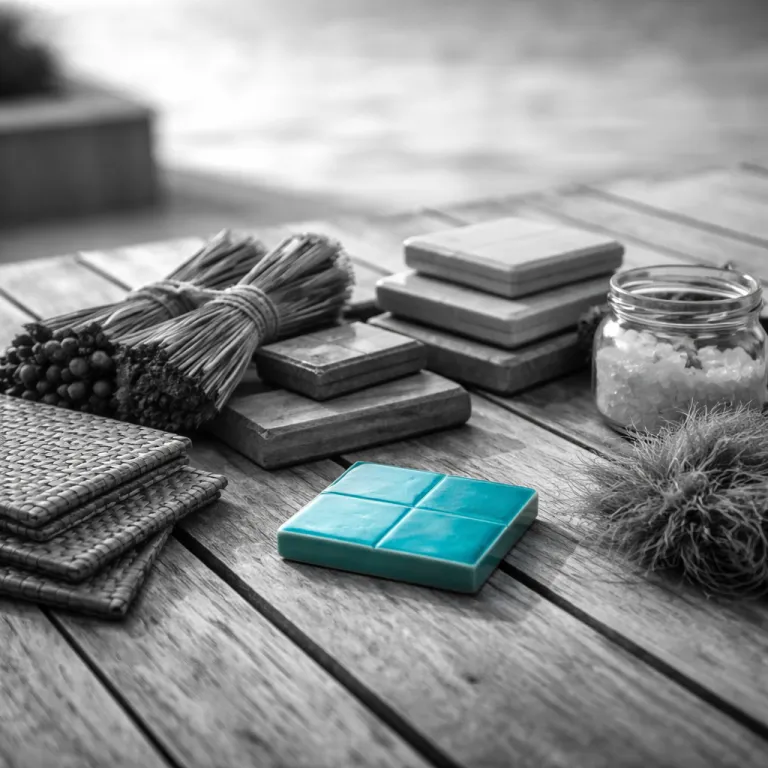
The brand’s “adventure plus luxury” philosophy challenges the old template of marble bathrooms and oversized chandeliers that could belong to any city hotel. Instead, the resort concept uses sustainable materials such as responsibly sourced timber, thatch and stone to echo traditional Maldivian building techniques while still feeling like contemporary design. You feel the breeze move through the villa, you hear the water under the deck, and the interior palette mirrors the reef rather than fighting it with high-gloss finishes.
For business travellers who spend their weekdays in sealed glass towers, this barefoot design approach can feel like a reset. The imagined villas at Rah Gili are not about excess square metres but about intelligent planning that balances privacy, shade and direct access to the lagoon. Many guests at comparable real-world properties now ask first about the quality of the house reef and the distance from their water villa to the drop-off, which shows how reef-focused travellers are quietly reshaping expectations.
In this model, resort developers work closely with local artisans to integrate Maldivian art, woven panels and carved wood into both public spaces and private villas. That collaboration ensures that traditional motifs and materials are not pasted on as décor but structurally embedded in the architecture of the island. When you walk from the jetty to your villa, every curve and texture quietly tells you that this is the Maldives, not a generic tropical resort.
From an operational perspective, adventure plus luxury also means designing for movement, not just for stillness. Pathways are lit to encourage night walks, jetty steps are shaped for easy water entry, and the layout of villas supports early morning dives with minimal friction between bed, gear and boat. These are small design decisions, yet they add up to a Maldives luxury experience where the built environment actively supports how you want to use the island.
For travellers using a guide Maldives booking platform, a case study like Rah Gili helps explain how design-led thinking can justify ultra-premium pricing without resorting to gold taps. When you compare resorts, look beyond the headline number of villas and ask how many are genuinely oriented towards the reef, how much of the island remains natural, and whether the interiors allow you to feel the Maldivian climate rather than escape it. That is where the next wave of island resort design is already heading.
Italian rigour, art driven interiors and the Fari Islands experiment
On another island, Bvlgari Resort Ranfushi has been announced as a forthcoming project that aims to bring Italian rigour to Maldives hospitality without falling into the trap of overstatement. The 20-hectare island is being shaped by ACPV Architects with a brief that explicitly ties luxury to environmental responsibility rather than to sheer scale. Here, architecture becomes a negotiation between Bvlgari’s design language and the ecological limits of a single Maldivian island, with details drawn from the official project announcement and developer statements available as of 2023.
The planned villas and overwater structures use a restrained palette of materials, with timber, stone and muted metals chosen to age gracefully in the marine climate. Instead of competing with the lagoon, the architecture is designed to frame long, low views of water and sky, allowing the interiors to carry the brand’s more expressive gestures. For guests, the result should be a resort that feels both unmistakably Bvlgari and unmistakably rooted in Maldivian nature.
Across the atolls, Patina Maldives at the Fari Islands has become shorthand for design-driven hospitality in the country. Patina sits within the wider Fari development, where multiple resorts share a man-made archipelago yet interpret island living in very different ways. The property’s architecture uses courtyards, shaded walkways and low-slung villas to create a sequence of spaces that feel almost urban in their layering, yet always open back to the water.
Inside, the interiors at Patina Maldives are unapologetically art driven, with commissioned works and installations integrated into both villas and public areas. This is not art as lobby decoration but art as part of the spatial narrative, guiding how you move through the resort and how you experience light and shadow. For a business-leisure guest, it can feel closer to staying in a coastal gallery than in a conventional Maldives hotel.
The design philosophy extends to the water villa layouts, where planning prioritises privacy and horizon lines over sheer size. Many villas feature a water pool that appears to merge with the lagoon, yet the real luxury lies in the way the architecture shields you from neighbouring decks. When you look at Patina as a case study, you see how high-end island stays are shifting towards experiences that are curated rather than simply constructed.
For travellers comparing luxury resorts across the Maldives, the Fari Islands offer a useful laboratory. You can stay at Patina Maldives, visit neighbouring resorts by boat and feel how different interpretations of architecture change your sense of time, space and even jet lag recovery. When using a guide Maldives resource to plan, pay attention to how each property describes its relationship with art, nature and water, because those words usually signal the underlying design priorities.
From marble excess to natural intelligence : how to book for the next decade
Recent data backs what many frequent travellers have felt intuitively about the direction of Maldives resort design. The Maldives Tourism Yearbook 2023 notes that a clear majority of resorts report adopting some level of environmental practice (see Chapter 7, “Environment and Sustainability”), and private island bookings continue to rise as guests seek both exclusivity and reassurance about impact. UN Environment Programme reports on small island tourism summarise the ideal formula as “sustainable architecture, private island concepts, and cultural authenticity.”
For you as a business-leisure guest, this shift means that the smartest luxury now looks quieter, more natural and more Maldivian. When you browse Maldives hotels, look for language around renewable energy, local sourcing of materials and collaboration with environmental organisations, because these are strong indicators that design decisions are being made with the reef in mind. A resort that talks only about marble bathrooms and oversized pools is increasingly signalling that its priorities are misaligned with the future of the islands.
Booking platforms such as Stay in Maldives, which position themselves as a guide Maldives for discerning travellers, can help filter this noise. When you research Maldives honeymoon places for unforgettable romantic escapes, pay attention to whether the property highlights reef proximity, marine biologist programmes and natural ventilation alongside the usual water villa imagery. The guest who cares more about the house reef than the pool size is quietly reshaping expectations from the demand side.
From a pricing perspective, the open question is whether barefoot design can command the same nightly rates as marble-heavy luxury. Early evidence from properties such as Patina Maldives and other design-forward resorts suggests that guests are willing to pay for experiences where architecture, interiors and nature work together. In practice, that means a villa that uses traditional Maldivian materials, shaded verandas and cross-ventilation can now sit comfortably in the same rate bracket as a more conventional marble suite.
When you evaluate the best Maldives options for an extended work-plus-leisure stay, build a simple checklist around design, nature and culture. Ask how much of the island remains in a natural state, how the resort handles pathways and lighting at night, and whether Maldivian art or craftsmanship appears in both villas and public spaces. These questions cut through marketing language and reveal whether the architecture is genuinely aligned with the future of high-end travel in the country.
Ultimately, the next decade of Maldives luxury will be defined less by the number of villas and more by the intelligence of their placement. Resorts that treat each island as a finite, fragile resource and design accordingly will feel relevant, while those clinging to marble excess will age quickly. As you plan your next trip, let a concise booking checklist guide you: prioritise house reef proximity from your water villa, evidence of sustainable architecture and visible Maldivian culture, so that the Maldives you experience feels as distinctive as the map suggests.
Key figures shaping Maldives resort design
- According to the Maldives Tourism Yearbook 2023 (Chapter 7, “Environment and Sustainability”), a substantial majority of resorts report adopting at least one environmental management measure, reinforcing why sustainable architecture now sits at the centre of high-end island planning.
- Data from the Maldives Hospitality Association 2022 industry briefing indicates that private island bookings have risen by around one-fifth over the past few years, showing that guests are willing to pay a premium when design delivers genuine island exclusivity.
- Ministry of Tourism arrival statistics for 2022–2023, summarised in the Maldives Tourism Yearbook 2023 (Chapter 4, “Tourism Accommodation”), show that more than two-thirds of visitors opt for all-inclusive formats, which shifts investment towards villas and shared spaces, because the villa becomes the core experience rather than just a room category.
Data snapshot
Source: Maldives Tourism Yearbook 2023; Maldives Hospitality Association 2022 briefing; UN Environment Programme, “Tourism in Small Island Developing States” (2020). Figures and chapter references are based on the most recent editions publicly available at the time of writing.
References
- Maldives Ministry of Tourism – Maldives Tourism Yearbook 2023 (notably Chapter 4, “Tourism Accommodation,” and Chapter 7, “Environment and Sustainability”)
- Maldives Hospitality Association – 2022 Industry Briefing on Resort Performance and Private Island Bookings
- UN Environment Programme – Tourism in Small Island Developing States (2020), guidance on sustainable resort development