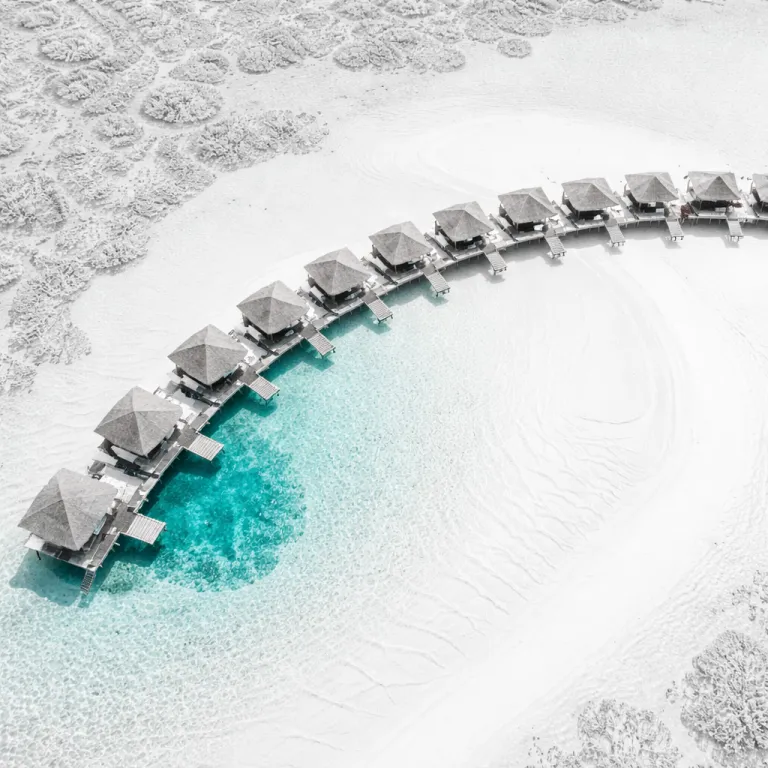
Northern atolls in the Maldives: how to choose the right island
The northern atolls in the Maldives: who they really suit
Think of the northern atolls in the Maldives as the quieter, more expansive side of the archipelago. Fewer flights, more open ocean, and a sense that the horizon belongs to you. Travellers who choose this area are usually trading quick access from Malé for a deeper, more immersive island experience in Baa, Raa, Noonu or Lhaviyani Atoll.
Compared with Malé Atoll or North Malé, the northern atolls feel less built up, with hotels and resorts spread across a wider area of sea. That spacing changes everything; beaches are emptier, the lagoon feels wilder, and the night sky is darker. Guests who care about the house reef, marine life and a calm atmosphere tend to be happiest here, while those who want nightlife or easy day trips from Malé Airport may find the distance less convenient.
For a first trip to the Maldives, these atolls work best if you already know you want an island resort stay rather than a city stopover. The journey usually involves a seaplane with operators such as Trans Maldivian Airways or Manta Air, or a domestic flight plus speedboat, so you need to be comfortable with a bit of travel time after landing. In return, you get some of the best hotels in the country for privacy, reef access and a genuine sense of being far out at sea. Typical return seaplane transfers from Malé to the northern atolls cost several hundred US dollars per person; the guide prices below were last checked in 2024 and should be confirmed at the time of booking.
| Atoll | Typical transfer from Malé | House reef access | Family-friendly resorts |
|---|---|---|---|
| Baa | 30–40 min seaplane (approx. US$400–700 return pp, checked 2024) | Excellent, many reefs close to shore | Several, often with kids’ clubs |
| Raa | 35–45 min seaplane (similar pricing band, checked 2024) | Good, mix of lagoon and drop-off | Strong choice of spacious islands |
| Noonu | 40–45 min seaplane or domestic hop | Very good in selected spots | High-end family resorts |
| Lhaviyani | 30–40 min seaplane | Good, often with easy entry | Popular with couples and families |
Mapping the northern atolls: Baa, Raa, Noonu, Lhaviyani
Names on a map matter here. Baa Atoll, Raa Atoll, Noonu and Lhaviyani form the core of what travellers usually mean by the “northern atolls” in the Maldives. Each atoll has its own rhythm, its own balance between lagoon and reef, and its own style of hotels and resorts, from intimate hideaways to larger family resorts.
Baa Atoll is the headline act for many guests, recognised as a UNESCO Biosphere Reserve since 2011 (designation confirmed by UNESCO) and offering easy access to world-famous manta gathering points such as Hanifaru Bay, which is typically busiest for manta rays between June and October according to local marine biologists and resort dive centres. If your priority is a strong house reef and serious snorkelling, this is often the first atoll to consider and a natural focus if you are searching for the best resorts in Baa Atoll during manta season. Raa and Noonu lean into space and seclusion; islands are more spread out, lagoons feel vast, and you often get that long, empty beach curve with only a handful of villas in sight.
Lhaviyani sits slightly closer to Malé than some of its northern neighbours, which can mean a marginally shorter transfer while still feeling far from the capital. Across these atolls, you will find a mix of large, full-service Maldives resorts and more intimate island resort properties, all operating on their own private islands. When comparing options, look beyond the star rating and focus on the specific atoll Maldives location, as it will shape your entire experience, from snorkelling conditions to how often you hear seaplanes overhead or see other islands on the horizon.
| Resort | Atoll | Approx. nightly price* | Transfer from Malé | House reef quality | Best for |
|---|---|---|---|---|---|
| Amilla Maldives | Baa | Upper mid to luxury (often US$900–1,800 in peak, checked 2024) | 30–35 min seaplane | Very good, easy access | Spacious villas, families and groups |
| Dusit Thani Maldives | Baa | Mid to upper mid (around US$600–1,200 high season, checked 2024) | 35 min seaplane | Excellent reef close to shore | Manta-focused snorkelling, couples |
| Finolhu Baa Atoll | Baa | Mid-range (roughly US$500–900 in winter, checked 2024) | 30 min seaplane | Good, with nearby snorkel spots | Design-led, social atmosphere |
| Emerald Maldives | Raa | Mid to luxury | 40 min seaplane | Good, mix of lagoon and drop-off | All-inclusive, families |
| InterContinental Maldives Maamunagau | Raa | Luxury (often from around US$1,200–2,000, checked 2024) | 35–40 min seaplane | Very good, rich marine life | Club benefits, relaxed luxury |
| Soneva Jani | Noonu | Ultra-luxury (commonly US$3,000+ in peak, checked 2024) | 40–45 min seaplane | Good, with guided trips | Iconic overwater villas, couples |
| Sun Siyam Iru Fushi | Noonu | Mid-range | 40 min seaplane | Good, easy snorkelling by boat | Family resorts Noonu Atoll |
| Hurawalhi Island Resort | Lhaviyani | Upper mid | 35–40 min seaplane | Very good, close reef | Adults-only, underwater restaurant |
| Kuredu Island Resort | Lhaviyani | Entry to mid-range | 35 min seaplane | Good, with easy lagoon | Larger island, active holidays |
*Price bands are indicative only and vary by season, room type and offers; figures were last checked in 2024 and should be re-confirmed when you book.
| Resort | Reef access score | Family friendliness | Transfer complexity |
|---|---|---|---|
| Amilla Maldives | 4.5/5 (easy swim from shore) | 4.5/5 (kids’ club, large villas) | 3/5 (seaplane only, fixed times) |
| Dusit Thani Maldives | 5/5 (renowned house reef) | 3.5/5 (good but more couple-focused) | 3/5 |
| Finolhu Baa Atoll | 3.5/5 (boat trips to top spots) | 4/5 (playful, social vibe) | 3/5 |
| Emerald Maldives | 4/5 (mix of lagoon and drop-off) | 4.5/5 (all-inclusive, kids’ facilities) | 3/5 |
| InterContinental Maldives Maamunagau | 4.5/5 (frequent turtle sightings) | 4/5 (club benefits suit families) | 3/5 |
| Soneva Jani | 4/5 (guided excursions, clear lagoon) | 3.5/5 (great for families but ultra-luxury) | 3/5 |
| Sun Siyam Iru Fushi | 3.5/5 (boat-access snorkelling) | 4.5/5 (large island, many activities) | 3/5 |
| Hurawalhi Island Resort | 4.5/5 (close, healthy reef) | 2/5 (adults-only) | 3/5 |
| Kuredu Island Resort | 3.5/5 (good lagoon, reef by boat) | 4.5/5 (very family-oriented) | 3/5 |
Beach, lagoon or reef: choosing your setting
White sand is a given. The real decision is how you want that beach to meet the water. In the northern atolls, some islands open onto broad, shallow lagoons with glassy water and long sandbars, while others drop quickly into deeper channels with a reef edge only a short swim from shore. The difference is not cosmetic; it defines your daily routine and the kind of Maldives hotel stay you will enjoy most.
If you picture yourself wading out from your villa at sunrise, the water barely reaching your knees for tens of metres, look for hotels and resorts that highlight their lagoon and family-friendly swimming. These settings are ideal for younger guests, relaxed floating and stand-up paddleboarding. For confident swimmers and divers, a strong house reef with easy access from the beach or jetty is far more compelling, especially in Baa Atoll and parts of Noonu where coral walls and fish life can be exceptional.
When you read hotel reviews, pay close attention to how guests describe the sea in front of their villa rather than just the generic “beautiful beach” comments. Some islands in the northern atolls have one side facing a calm lagoon and another facing the open ocean, so room orientation matters. A so-called “best” view hotel for sunsets may not be the one with the easiest reef access, and you will need to decide which experience matters more to you when you compare different Maldives resorts and room categories.
Resort style, spa culture and facilities
Life on a private island resort is defined by its design choices. In the northern atolls, you will find everything from barefoot, sand-underfoot restaurants to polished, architectural spaces that feel almost urban in their precision. Neither is inherently better; the question is which atmosphere fits the way you like to travel. Some Maldives hotels lean into a castaway mood, with sandy paths, thatched roofs and a quiet, almost meditative spa hidden in the vegetation.
Others in Baa, Raa or Lhaviyani Atoll operate more like full-scale hotel resorts, with multiple restaurants, a large central swimming pool and a structured activity programme. If you are travelling with children or a multi-generational group, that density of facilities can be a real advantage. Couples or solo travellers often prefer smaller, more dispersed layouts where the resort spa, yoga pavilion and beach bars are tucked away rather than clustered around one hub.
Pay attention to how the property describes its spa and wellness offering. In the northern atolls, many high-end Maldives resort spas combine overwater treatment rooms with jungle-style pavilions, often using local coconut, seaweed or sand in their rituals. Signature experiences might include hot-stone massages, sound-healing sessions or night-time stargazing treatments. If wellness is central to your trip, look for a resort that treats its spa as a core part of the experience rather than a simple add-on, and check availability for signature treatments when you plan your stay.
Access, transfers and the reality of distance
Landing at Malé Airport is only the beginning. For the northern atolls, you will usually connect onwards by seaplane or by a domestic flight followed by a speedboat. This extra leg is not a minor detail; it shapes your arrival and departure days and should be factored into your booking decisions. Expect the transfer to add both time and a sense of adventure, with low-altitude views over sandbanks and reef rings.
North Malé Atoll and the Fari Islands cluster sit closer to the capital and are sometimes grouped with the northern region, but they offer a very different feel from Baa or Noonu. If you want to minimise travel after a long-haul flight, staying nearer to Malé Atoll can make sense, even if it means a slightly busier seascape with more boat traffic. For those who value remoteness above all, the deeper northern atolls justify the extra flight, which typically lasts 30–45 minutes by seaplane or around 25 minutes by domestic hop plus 20–40 minutes by speedboat; when you plan a seaplane transfer from Malé to Noonu or Raa, always confirm the latest schedules with your resort.
When you compare hotels Maldives wide, look carefully at transfer type, schedule and how it aligns with your international flights. Some properties have fixed seaplane slots, which can mean waiting at the terminal if your arrival time does not match. Transfer prices can be significant, often running to several hundred US dollars per person for a return seaplane. Before you check availability and confirm your booking, make sure you understand the transfer logistics and how they will affect your first and last day on the island.
How to compare hotels and make a confident booking
Choosing a hotel in the northern atolls of the Maldives is less about chasing the single “best” resort and more about matching the island to your priorities. Start with three filters: atoll, reef quality and overall atmosphere. Baa Atoll is usually strongest for marine life and manta encounters, while Raa, Noonu and Lhaviyani often excel in space, long beaches and a sense of seclusion. Once you have chosen the atoll, compare specific islands on their house reef access, beach layout and room categories.
Room type matters more here than in a city hotel. Overwater villas deliver that classic Maldives hotel image, but beach villas often offer more privacy, easier access to the sand and a softer connection to the island’s vegetation. If you are travelling as a family or with friends, look for two-bedroom or interconnecting options and check how close they are to the main swimming pool, kids’ facilities or quieter parts of the beach. For couples, a standalone villa on the sunrise side of the island can feel more private, even if it is not marketed as the top category.
As you read guest reviews, focus on patterns rather than isolated comments; recurring praise for staff attentiveness, reef health or food quality is more telling than a single glowing or negative review. When you check availability, pay attention to minimum stay requirements and any hotel offers that include spa treatments or experiences such as guided snorkelling or manta-focused excursions. Instead of fixating on a single price per night, think in terms of the overall experience across your stay; the right island resort, in the right atoll Maldives location, will shape every hour you spend in the water and on the sand.
FAQ
Is the northern atolls region a good choice for a first trip to the Maldives?
The northern atolls are an excellent choice for a first Maldives trip if you value tranquillity, strong house reefs and a sense of remoteness over quick access from Malé. You will spend more time in transit after landing, but in return you get quieter beaches, fewer neighbouring islands in sight and some of the country’s most rewarding snorkelling. Travellers who prefer nightlife, shopping or frequent excursions by speedboat may be better served by staying closer to Malé Atoll or North Malé.
What is the best time to visit the northern atolls in the Maldives?
The most reliable weather in the northern atolls, as in the rest of the Maldives, typically runs from November to April, when seas are calmer and skies are generally clearer. This period is particularly appealing for guests who prioritise snorkelling, diving and long days on the beach. Outside these months you may find more cloud and passing showers, but also a softer light and a slightly quieter atmosphere on many islands.
How important is the house reef when choosing a hotel in the northern atolls?
The house reef is a key decision factor if you enjoy snorkelling or diving, because it determines how easily you can access marine life directly from the beach or jetty. In atolls such as Baa and parts of Noonu, some islands have reefs that begin only a short swim from shore, allowing guests to see coral, turtles and reef fish without joining a boat excursion. If you are less confident in the water or travelling with young children, you may prefer an island with a broad, shallow lagoon and rely on organised trips for deeper reef experiences.
Do resorts in the northern atolls provide equipment and activities for water sports?
Most island resorts in the northern atolls offer a well-equipped water sports centre with kayaks, stand-up paddleboards and snorkelling gear available for guests. Many also organise guided snorkelling sessions on the house reef, dolphin cruises and diving excursions to nearby sites within the atoll. When comparing hotels and resorts, check which activities are included in your stay and which are charged separately, especially if you plan to spend a significant amount of time on the water.
Are the northern atolls suitable for families with children?
The northern atolls can work very well for families, particularly on islands with wide, shallow lagoons and structured kids’ clubs. Larger resorts often combine family-friendly villas, a central swimming pool and supervised activities, which helps keep younger guests engaged while adults enjoy the spa or quieter corners of the beach. If you are travelling with children, prioritise islands with gentle entry into the sea, shaded play areas and a choice of casual dining options.