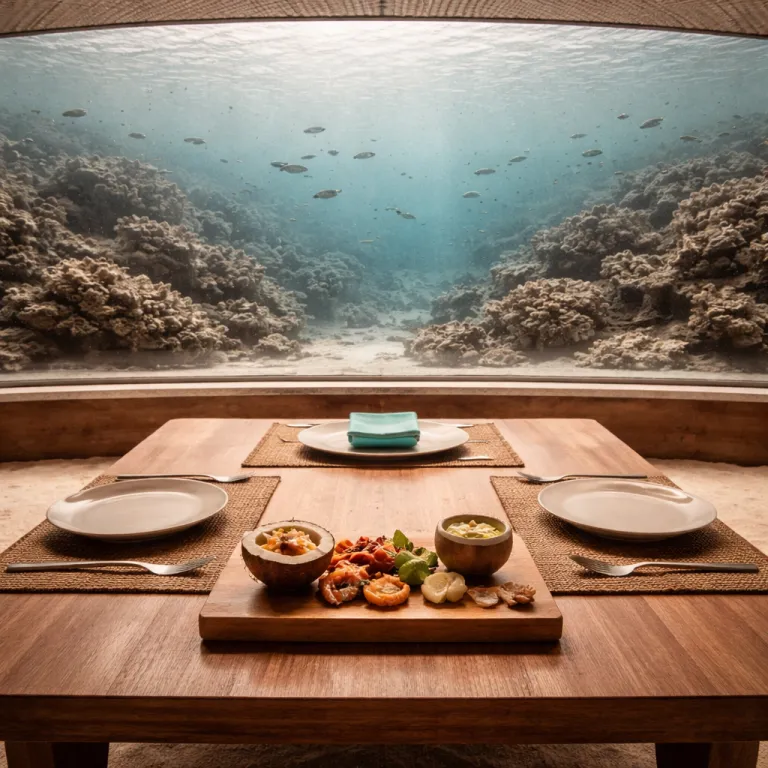
From novelty to benchmark: how underwater dining grew up
Searches for an underwater restaurant in the Maldives usually start with a fantasy and a photo. Serious travelers now ask how the restaurant, the dining concept and the dinner service measure up to the reef outside, because the format has shifted from undersea gimmick to a credible gastronomic stage. Families choosing a luxury island in the Maldives increasingly weigh whether the submerged dining room is a once in a lifetime experience or a one course photo stop before moving on.
Ithaa Undersea Restaurant at Conrad Maldives Rangali Island set the tone, placing just 14 guests in an all glass capsule five meters below the sea and pairing a refined tasting menu with reef life drifting past. That first generation focused on the view, with menus that echoed European fine dining and a fixed dinner menu that changed slowly, while lunch menus were lighter and shorter. As more islands opened their own venues, the question became sharper for every new restaurant immersive concept in the Maldives: could the experience justify the premium over an excellent deck side lunch or dinner above the lagoon.
Today, properties treat each undersea restaurant as a flagship, not a sideshow. Resorts invest in marine biologists, sustainable sourcing and engineering that keeps structures stable at several meters depth, then ask chefs to build menus that follow the rhythm of the sea outside. For guests, that means the experience Maldives promises on glossy pages now has to deliver layered menus, thoughtful breakfast to dinner continuity across the island and a clear value story that stands up to scrutiny.
5.8 Undersea and H2O: when the reef dictates the menu
Hurawalhi’s 5.8 Undersea Restaurant is still the reference point many guests use when comparing any underwater dining room Maldives wide. The space sits 5.8 meters below sea level, wrapped in glass so the sea becomes a living wall around every table, and the restaurant team leans into that immersion with a tightly choreographed multi course dinner. At lunch, the same room softens into a calmer service, with daylight filtering down through meters of water and a slower, more observational experience.
On Raa Atoll, H2O by Chef Andrea Berton pushes the format further, bringing a Michelin influenced perspective to an undersea restaurant that treats the reef as both stage and constraint. Here, the dinner menu is built around clean flavors, precise textures and a strong respect for local catch, while the lunch–dinner sequence across the island keeps heavier dishes on land and reserves the capsule for tasting style courses. Families who plan carefully can align their arrival with a lunch seating, then follow with a more relaxed dinner on the beach, balancing the intensity of the restaurant immersive setting with open air meals.
Both venues show how the sea outside the glass shapes what appears on the menus. Strong currents or spawning events can change which fish are served, and chefs often adjust a course or two on the day rather than lock the menu months ahead. When you compare meal plans for your stay, use a clear guide to Maldivian meal plan structures, looking closely at how all inclusive and half board options treat supplements for underwater dining, so you understand how each undersea restaurant visit will stack against your overall budget.
Six metres below with Chef Servetto: technique, ethics and family logistics
Chef Giorgio Servetto’s environmentally conscious underwater events with Atmosphere Core show what happens when double Michelin star technique meets a six metres deep capsule. The focus is not only on refined dining but on how each course reflects the surrounding sea, from line caught fish to vegetables sourced from island gardens rather than flown in, and the dinner menu often reads like a quiet manifesto on responsible luxury. For families, this level of cooking can be both an education and a logistical puzzle, especially when younger guests have earlier breakfast and lunch routines on the island.
Servetto’s teams work closely with marine biologists to ensure the undersea restaurant operations do not stress the reef, aligning lighting, noise levels and even champagne service with conservation guidelines. As one Atmosphere Core training note on reef etiquette explains, light intensity, sound and guest behavior all influence how reef fish feed and breed, so service choreography is designed around those limits. That collaboration echoes the broader insight that underwater venues rely on submerged glass structures, advanced engineering and sustainable practices to balance safety and spectacle, and it underlines why these restaurants are considered safe when built to international standards such as Eurocode and American Concrete Institute guidelines. The result is an experience Maldives travelers can feel comfortable booking for older children who are curious about the sea, while perhaps keeping toddlers at the surface restaurant where movement is easier.
Practicalities matter here: seating is limited, often to fewer than twenty guests, so reservations should be made well before arrival and reconfirmed once you are on the island. Age limits apply at several venues, typically starting at 6–8 years for lunch and 12 years for dinner, and the dress code is usually smart casual, which in Maldivian terms means light resort wear rather than formal jackets, with the same code applying whether you visit for lunch, dinner or a special event. Expect set menus with defined course counts, clear cancellation policies and a request to follow house rules on flash photography so marine life remains undisturbed.
What families should know before booking an underwater table
For many readers of stay in Maldives, the question is not whether to try an underwater restaurant, but how to make it work for a family itinerary. Start by mapping the dining rhythm of your stay: think about when children usually eat breakfast, how long they can sit through a multi course dinner and whether a long lunch menu in a glass capsule will feel magical or simply long. On smaller islands, the undersea restaurant often sits a short boat ride away, so factor transfer time into nap schedules and sunset plans.
Pricing is unapologetically premium, with set menus for lunch and dinner often priced per person rather than per dish, and supplements added on top of standard meal plans. As a broad benchmark, multi course experiences at well known venues frequently start around USD 250–350 per adult before drinks, with champagne pairings adding a significant extra. Champagne pairings, special occasion cakes and private use of the restaurant immersive space can push the bill higher, so ask for a sample dinner menu and lunch menu before you commit, and check whether children’s menus are available or if younger guests are expected to follow the same course progression. Some resorts offer one underwater lunch or dinner credit per stay in higher room categories, which can soften the impact and make the experience Maldives highlight feel more accessible.
Operational details are less glamorous but crucial. Underwater venues usually operate on fixed seatings, with doors open only at specific times and a clear arrival window before the descent, so late guests may miss the start of service. You will be asked to respect a smart casual dress code, remove shoes in some cases and accept that the privacy policy for photography may limit tripods or bright lights, all in the name of safety and reef health.
Is the reef the real star? value, atmosphere and what to book instead
After two decades of submerged restaurant openings in the Maldives, a pattern is clear: the most memorable evenings are those where the sea outside and the menu inside feel in quiet conversation. When the restaurant team times dinner so a particular school of fish passes by during a key course, or dims lights to let bioluminescence show beyond the glass, the dining room becomes a theatre that no rooftop bar can match. Yet many seasoned guests will tell you that a dawn snorkel on a strong house reef can rival any undersea restaurant seating for emotional impact.
That tension is healthy, because it forces resorts to refine both menus and marine stewardship. Properties like Conrad Maldives Rangali Island, Niyama Private Islands and Hurawalhi Island Resort work with marine biologists, invest in coral projects and use their restaurants as quiet ambassadors for conservation, aligning the experience Maldives visitors have at the table with what they see on guided snorkels. If you care as much about wellness as about dinner, pair an underwater meal with a treatment at a serious spa focused on results rather than décor, using a specialist guide to Maldivian spa menus to choose the right island.
For some travelers, the price of a single multi course dinner underwater might instead fund a private sandbank breakfast, a marine biologist led night snorkel and a champagne picnic on a quiet side of the island. Others will feel that one perfectly paced restaurant immersive evening, six meters below the surface with just a handful of guests, is the story they want to bring home. Either way, read the small print on dress code, photography rules and each resort’s privacy policy, then follow your instincts about whether your family’s rhythm suits a capsule beneath the sea or a table under the open sky.
FAQ
Are underwater restaurants in the Maldives safe for families?
Underwater venues in the Maldives are built using advanced engineering and are subject to strict safety standards. As one resort safety manual summarises in its guidance on undersea dining, underwater restaurants are considered safe when designed to code and inspected regularly. Families should still check age restrictions, emergency procedures and whether younger guests will be comfortable in an enclosed glass space several meters below the surface.
What kind of food is served at Maldivian underwater restaurants?
Cuisine varies by island, but most undersea restaurants offer multi course menus that lean toward European techniques with strong Maldivian and wider Asian influences. You will often find local reef fish, crustaceans, seasonal vegetables and refined desserts, with separate lunch menu and dinner menu formats. Some, such as Subsix at Niyama, highlight Nikkei inspired dishes, while others focus on modern European tasting menus with optional champagne pairings.
Is there a dress code for underwater dining?
Yes, almost every underwater restaurant in the Maldives applies a smart casual dress code. That usually means light resort wear, covered swimwear and sandals or bare feet, rather than formal jackets or gowns. Resorts will outline the exact code in pre arrival information, and guests are expected to follow it for both lunch and dinner seatings.
How far in advance should I book an underwater restaurant?
Capacity is limited, often to fewer than twenty guests per seating, so advance reservations are essential. For peak travel periods, aim to secure a table when you confirm your room booking, then reconfirm on arrival at the island. Last minute spaces sometimes open, but families with fixed schedules should not rely on cancellations.
Are there age restrictions or photography rules I should know about?
Many underwater venues set minimum ages, especially for evening dining, to preserve the atmosphere and manage safety. Photography is usually allowed, but flash, tripods and bright lights may be restricted to protect marine life and respect other guests’ privacy. Always review the resort’s privacy policy and house rules so you can balance capturing the moment with keeping the reef and the restaurant calm.