Why maldives coral restoration science mmri now defines meaningful luxury
Luxury in the Maldives is shifting from infinity pools toward living coral. For couples choosing a premium resort, the real upgrade is often access to serious, science-led reef restoration projects rather than another overwater wine cellar. On islands where the house coral reef still glows with life, sunrise snorkels feel more valuable than any turn down amenity.
This change is driven by the stark reality of climate change on Maldivian reefs and by a new generation of local marine scientists who refuse to treat coral as décor. Across the Indian Ocean, coral bleaching has turned once vibrant coral reefs into ghostly skeletons, and the Maldives is on the front line of this global story. When you book a high end stay here, you are stepping into a living laboratory where reef restoration, reef monitoring and national coral policy now sit alongside spa menus and wine lists.
For travelers, that means your choice of resort quietly shapes the future of the ocean resources that keep these islands habitable. The Republic of Maldives depends on healthy marine ecosystems for coastal protection, fisheries and tourism, so coral restoration is no longer a side project but a core part of national development. Understanding how the Maldives Marine Research Institute (MMRI) works with resorts, government and local communities helps you read between the lines of sustainability claims and decide where your money genuinely supports the reefs the Maldives still has left.
Inside the ReefSeed system: how the Maldives grows its own coral
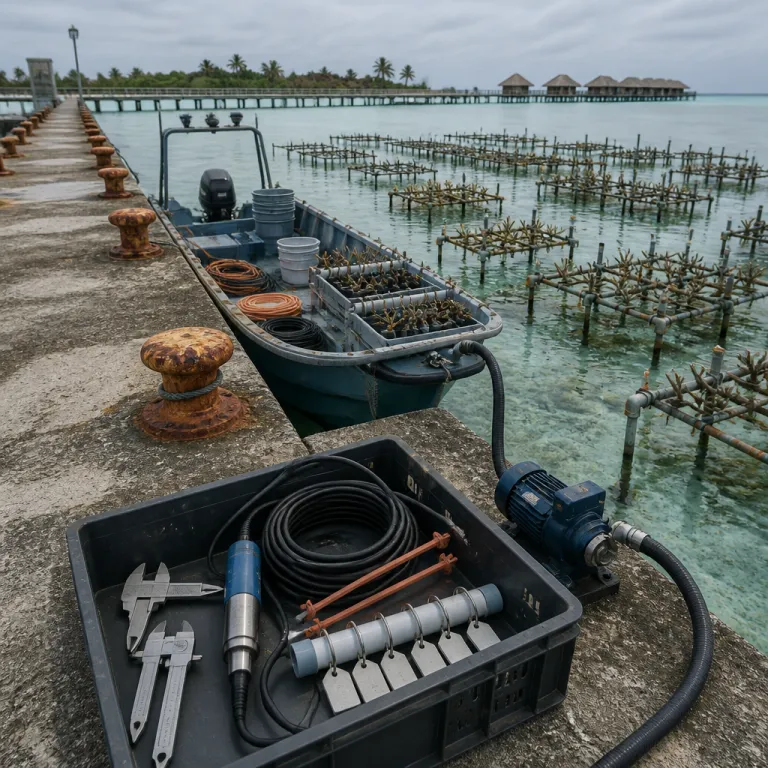
At the heart of the country’s new coral restoration science is a portable technology with a deceptively simple name: the ReefSeed system. Instead of transplanting broken coral fragments, this approach collects coral spawning slicks, rears coral larvae in compact tanks, then seeds juvenile corals back onto damaged reefs. It is reef rehabilitation scaled for a nation of small islands, designed to move between Maldivian reefs like a traveling nursery.
The system was first deployed at Maniyafushi in South Malé Atoll, a short boat ride from many luxury properties yet operating as a serious marine field site. Public MMRI briefings describe how scientists there reared large numbers of larvae and attached thousands of juvenile corals onto hundreds of seeding devices across multiple reef locations. Exact figures vary between seasons and reports, and readers should consult MMRI technical summaries for current totals, but even conservative estimates mark a quiet revolution in national reef restoration capacity that stays within Maldivian control.
Funding from the G20 Coral Research and Development Accelerator Programme, reported at around 1.5 million US dollars over three years in official G20 documentation, underwrites this national coral push rather than outsourcing it to foreign consultancies. Maldivian researchers trained on Australia’s Great Barrier Reef now run the programme at home, aligning scientific aims with local management realities and government priorities. As MMRI director Dr. Shafiya Naeem has explained in public talks, Maldivian-led science allows solutions to be designed for local islands rather than imported from generic models. If you care where your room rate flows, this is the kind of marine development story that should guide your choice of so called luxury eco resorts in the Maldives, rather than vague promises about planting a single coral.
Local scientists, global stakes: why independence matters more than imported programmes
The most radical part of the MMRI-led restoration effort is not the hardware but the passport of the people operating it. For the first time, the ReefSeed system is being run primarily by Maldivian scientists rather than foreign supervisors, which changes how reef restoration is woven into national management and tourism. Decisions about where to seed coral reefs, how to use limited resources and how to involve local communities now sit with people who grew up on these islands.
That independence matters because climate change is not a short term crisis for the Maldives but an ongoing condition that shapes every policy choice. When coral bleaching hits, it is Maldivian marine biologists who must decide which reefs the Maldives should triage for protection, which house reef near a resort can host restoration efforts and how to balance tourism access with reef monitoring. Global expertise still flows in through training and partnerships, yet the day to day system management now reflects local knowledge of currents, monsoon patterns and community fishing grounds.
For travelers, this means your stay can support a national coral strategy rather than a one off foreign project that disappears when the grant ends. Booking into properties that collaborate with MMRI and respect government guidance on marine ecosystems helps align your holiday with long term reef resilience. To understand how this sits within the broader shift in high end hospitality, consider how the all villa arms race is reshaping what luxury means in the Maldives and pushing resorts to demonstrate credible environmental stewardship alongside private pools and butler service.
From lab tanks to resort reefs: where guests fit into restoration efforts
Most couples will never see the inside of a ReefSeed tank, yet you will feel its impact when you slide off your villa ladder onto a recovering coral reef. Lab based MMRI projects such as Maniyafushi supply juvenile corals, while resort programmes provide the shallow, accessible sites where those corals can grow under watchful eyes. This is where names like Sheraton Maldives Full Moon, Banyan Tree Vabbinfaru, Anantara and Cinnamon Dhonveli enter the restoration story with their coral frame nurseries.
At Sheraton Full Moon, for example, a partnership with Reefscapers has produced hundreds of coral frames and tens of thousands of colonies over recent years, while Cinnamon Dhonveli has installed smaller numbers of frames using naturally broken coral fragments. Reported survival rates vary by site and season, and not all data is publicly available, but many programmes now share approximate figures during guest briefings or in resort sustainability reports. These initiatives do not match the scale of national coral larvae production, yet they create visible reef restoration sites where guests can snorkel, adopt frames and fund ongoing reef monitoring. When done transparently, resort based restoration efforts complement the MMRI system by turning abstract climate change impacts into something you can see, photograph and support.
Not every offer to “plant a coral” is equal, though, and this is where your discernment matters. Look for programmes that publish survival data, work with recognized marine partners and align with government guidelines on marine ecosystems rather than treating coral as a marketing prop. For a deeper dive into which guest experiences genuinely help reefs, explore how coral restoration became the Maldives’ most compelling guest experience by comparing different resort briefings, asking about monitoring methods and checking whether projects are reviewed by independent marine scientists.
What your booking really funds: economics, climate risk and honest choices
Every night you spend in the Maldives quietly allocates money between air conditioning, champagne and coral. Maldivian resorts pay concession fees, environmental levies and voluntary contributions that help the government and MMRI maintain reef monitoring, national coral programmes and marine protected areas. Some properties go further, channeling a fixed share of room revenue into restoration efforts or co funding ReefSeed system deployments near their house reef.
The uncomfortable truth is that no amount of coral restoration science can fully offset the climate change emissions from long haul flights and energy hungry villas. Coral bleaching events are increasing in frequency, and while projects such as Maniyafushi’s mass larvae rearing offer hope, they still operate at a fraction of the scale of the threat. As one expert summary from the U.S. National Oceanic and Atmospheric Administration explains with clarity: “How does climate change affect corals? It raises sea temperatures, leading to coral bleaching and mortality.”
So what can you do beyond choosing a resort with pretty coral reefs the Maldives still retains around its lagoons? Start by asking precise questions about reef restoration budgets, long term management plans and how local communities are involved in decision making. Then, use independent guides and official Maldivian environmental reports to align your stay with science led marine development rather than greenwashed marketing, checking that claims about coral restoration, reef monitoring and climate adaptation are backed by verifiable data.
How to choose a resort that treats coral as capital, not décor
Choosing where to stay in the Maldives now means choosing which coral reef future you want to support. For couples planning a romantic escape, the most meaningful luxury often lies in waking up above a living coral reef that is part of a coherent MMRI and ReefSeed network. That requires looking past the villa count and asking how each property treats its surrounding marine ecosystems as core natural capital.
Start with geography and ask whether the resort sits near Maldivian reefs involved in MMRI or ReefSeed system work, such as parts of South Malé Atoll around Maniyafushi. Then, look for clear evidence of collaboration with national coral programmes, transparent reporting on reef monitoring and honest discussion of climate change risks rather than vague sustainability slogans. Resorts that publish data on coral spawning observations, coral larvae survival and long term restoration efforts in publicly accessible reports are usually the ones taking their responsibilities seriously.
On the ground, small details reveal a lot about management culture and respect for ocean resources. Briefings that explain local regulations, guidance on reef safe sunscreen and limits on guest numbers at sensitive coral reef sites show that a property aligns with government aims and community expectations. When a resort treats its house reef as a shared asset for the Republic of Maldives rather than a private aquarium, your stay becomes part of a wider system that gives these islands a fighting chance against global change.
FAQ
What is coral gardening and how is it used in the Maldives ?
Coral gardening is a method of growing corals in nurseries before transplanting them to reefs. In the Maldives, marine teams use mid water rope nurseries and coral frames to farm fragments, then outplant them onto degraded coral reefs near resorts and research sites. This approach complements larval based MMRI projects by restoring structure and diversity on specific reef sections.
Why are coral nurseries and systems like ReefSeed important for travelers to understand ?
Coral nurseries and the ReefSeed system help restore damaged reefs and increase coral resilience in the face of climate change. For travelers, they indicate that a resort is investing in long term marine ecosystems rather than treating coral as a backdrop for photos. Understanding these programmes lets you choose stays that support serious restoration efforts and national coral strategies.
How does climate change affect corals in the Maldives ?
Rising sea temperatures linked to global climate change trigger coral bleaching, where corals expel the algae that feed them and can die if heat stress persists. The Maldives, sitting in the warm Indian Ocean, is particularly exposed, with recent events affecting a large share of Maldivian reefs. This is why MMRI research, reef monitoring and careful management of ocean resources have become central to government policy and resort planning.
Can guests meaningfully help with reef restoration during a luxury stay ?
Guests can contribute by funding well designed coral restoration programmes, joining guided monitoring snorkels and following best practice such as not touching coral and using reef safe sunscreen. The most impactful actions are often financial support for MMRI linked projects and choosing resorts that integrate restoration efforts into their core operations. Asking informed questions about coral larvae work, coral spawning events and long term management keeps pressure on properties to move beyond symbolic gestures.
How should I evaluate a resort’s claims about protecting coral reefs ?
Look for specific data on coral restoration projects, such as numbers of frames, survival rates and partnerships with recognized marine institutions. Resorts that work with MMRI, follow government guidelines and publish clear information about reef monitoring and climate adaptation are usually more credible. Avoid properties that only mention planting a coral without explaining the system, the science or how local communities are involved.